
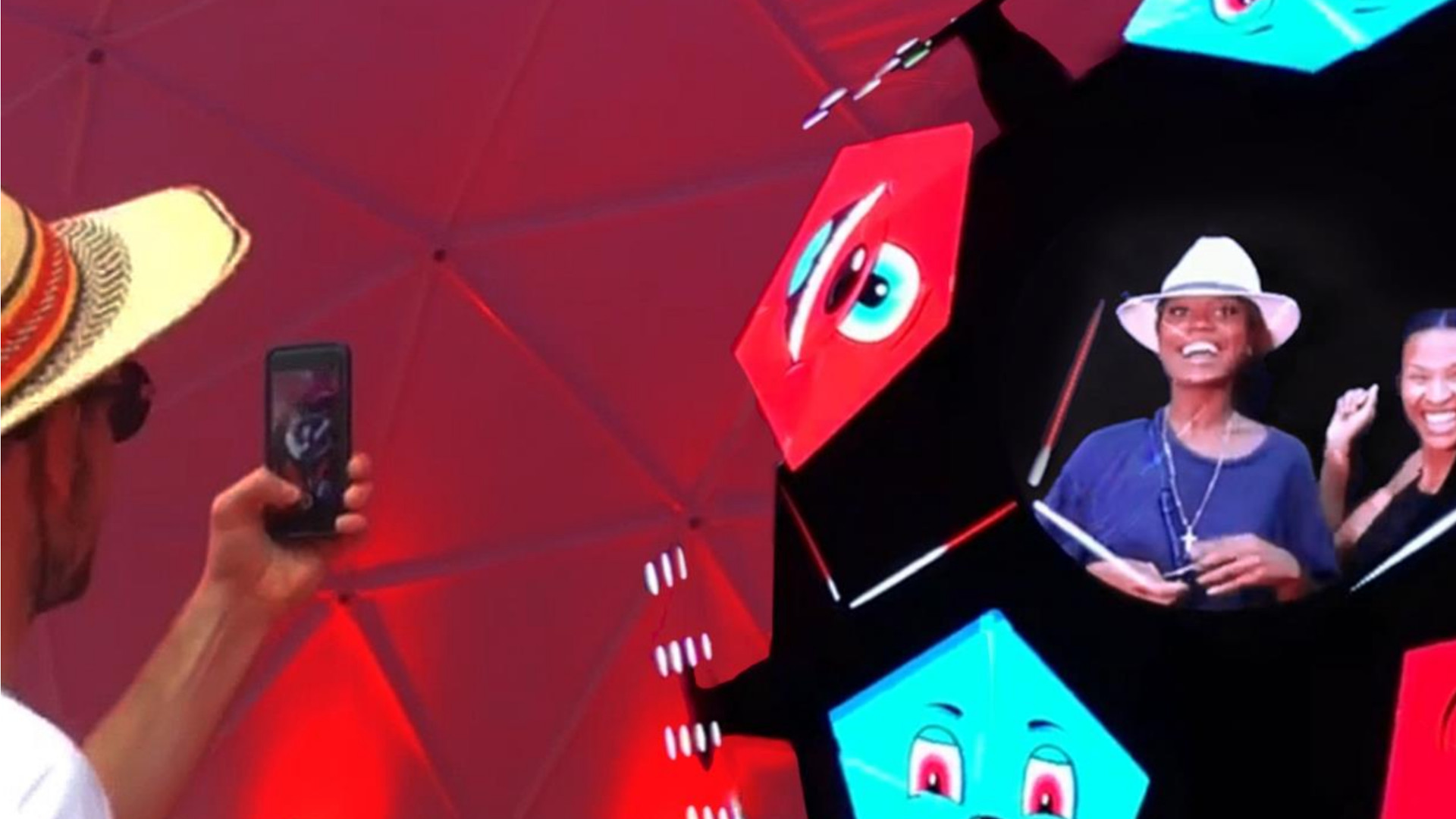
Walk through any trade show floor and you’ll see the same problem everywhere: booth after booth with static screens, printed banners, and representatives desperately trying to grab attention. Visitors have learned to tune out traditional displays because they’ve seen them a thousand times before.
But when a 3D hologram fan appears in their peripheral vision, something different happens. The human brain is wired to notice movement, especially when that movement creates floating 3D images that seem to defy physics. An HDMI hologram fan doesn’t just show your product—it stops traffic. The combination of holographic fan blades spinning at high speed with real-time content creates an irresistible visual magnet that pulls visitors toward your booth instead of past it.
The Real-Time Advantage Your Competitors Don’t Have
Here’s where most holographic displays fall short: they only play pre-recorded content. You create a video, upload it, and hope it answers every question a visitor might have. The HDMI hologram fan changes this completely. With HYPERVSN SmartV technology, you can connect any HDMI source directly to your 3D holographic display.
This means an engineer can manipulate a CAD model in real time while prospects watch their product rotate and explode into component views as a floating hologram. A sales team can run live video conferences with headquarters, projecting executives as holographic humans.
Product configurators respond instantly to customer choices, showing different colors, features, or specifications as 3D holograms the moment they’re selected. This isn’t just innovation for innovation’s sake—it’s the difference between a passive viewer and an engaged buyer. When visitors see you controlling the hologram fan in real time, answering their specific questions with live demonstrations, they understand they’re looking at practical technology, not a gimmick.
What Makes HDMI Hologram Fan Different from Standard Holographic Displays
Most 3D hologram fan systems rely entirely on pre-loaded content managed through a mobile app. You upload videos, set playlists, and that’s it. HYPERVSN SmartV breaks this limitation with a built-in HDMI input that accepts any standard video signal.
This transforms a holographic fan from a digital sign into an interactive solution. The fan HDMI connection means you’re not locked into proprietary formats or limited by storage capacity. Whatever appears on your computer screen, presentation software, or video wall control system can instantly become a floating 3D hologram.
For trade show exhibitors, this solves the critical problem of flexibility: when a visitor asks «Can you show me how this works with our specifications?», you don’t have to say «Let me send you a video later». You demonstrate it right now, in spectacular 3D holographic form, with the visitor standing inches away from a product that isn’t physically there.
Connect Anything: HDMI Integration Power
The HDMI fan capability of HYPERVSN SmartV opens possibilities that standard hologram fans simply cannot match. Connect a laptop running your CAD software and rotate complex mechanical assemblies in real time as floating holograms—engineers at trade shows have reported this single feature generates more qualified leads than any other booth element.
Plug in a video conferencing system and project remote experts as life-sized holographic humans who can answer technical questions—particularly valuable for companies whose key personnel can’t attend every show. Run live product configurators where customers select options on a tablet and instantly see their customized product as a 3D hologram.
HYPERVSN offers four main configurations to match your trade show needs: Holo Box (1, 4, or 6 modules with 170° visibility, perfect for product showcases with no setup required), Holo Wall (scalable from 1 to 15+ modules for stage backdrops or large expo stand walls), Holographic Human (3 vertical modules creating realistic human-sized holograms with optional protective cases), and AI Holo Avatar (half-body or full-body conversational AI for concierge services and customer support). Each configuration accepts the same HDMI input, so your content strategy remains consistent regardless of booth size.
Real-Time Product Demonstrations with HDMI Hologram Fan Technology
The power of an HDMI hologram fan becomes obvious when you see it in action at a trade show.
- A manufacturing company displays a complex valve assembly—as visitors approach, an engineer uses CAD software to explode the hologram into individual components, rotate specific parts, and highlight materials or tolerances relevant to each visitor’s industry.
- An automotive supplier shows different vehicle configurations: a prospect mentions they need the system for electric vehicles, and within seconds, the EV version appears as a 3D hologram with all relevant specifications.
- A software company runs their interface as a hologram, with a sales rep navigating through features in real time while prospects watch the floating display respond instantly to each click.
This is why the HDMI input matters: it turns your 3D holographic fan from an attention-getter into a sales tool. Pre-recorded content can introduce concepts, but real-time interaction closes deals. When visitors see you manipulating the hologram fan based on their questions, they’re not just impressed by the technology—they’re convinced you understand their needs and can deliver custom solutions.
From Box to Booth: Setup and Specifications
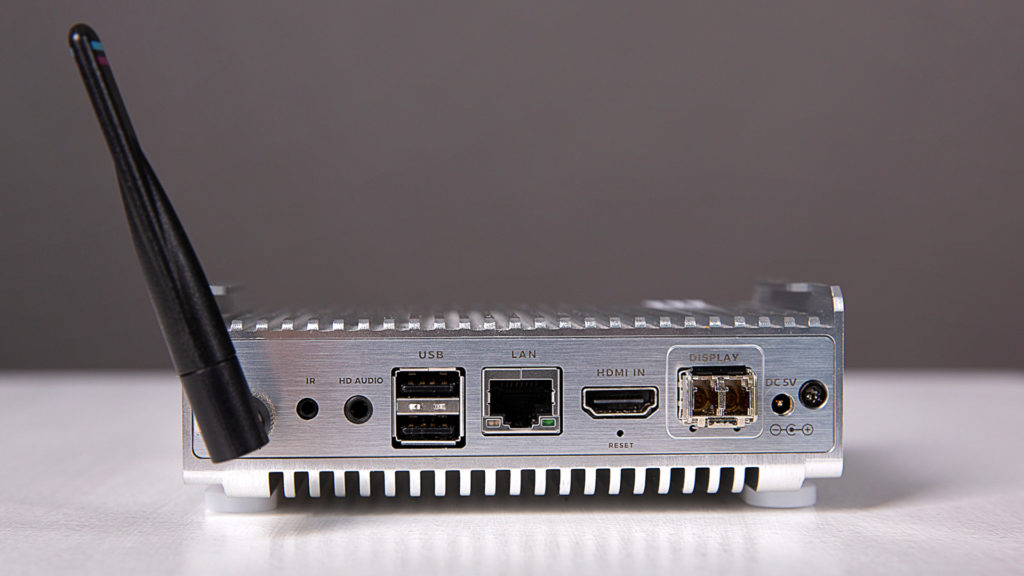
Trade show exhibitors worry about complicated technology eating into precious setup time, but HYPERVSN SmartV systems are designed for the realities of expo floors.
The Holo Box requires no setup—unpack it, plug in power and HDMI, and you’re projecting 3D holograms within minutes.
Larger Holo Wall configurations use a simple wall mount system that any exhibitor can install without specialized tools. The mobile app handles content management for pre-loaded videos, while the fan HDMI input remains always available for live demonstrations. Technical specifications that matter for trade shows: 170° viewing angle means visitors from almost any booth position see clear holograms, fan blades spin fast enough that they’re invisible to the human eye (creating the illusion of floating images), and resolution is optimized for the typical 2-4 meter viewing distance in expo environments.
Power consumption is surprisingly low—a 6-module Holo Box draws less electricity than a standard video wall of comparable visual impact. Weight and portability are designed for shipping to multiple shows: protective cases include everything needed for transport and meet airline cargo requirements.
ROI and Getting Started with Your HDMI Hologram Fan Display
Let’s talk numbers, because innovation only matters if it generates returns. Trade show exhibitors using HDMI hologram fan technology report metrics that traditional booth elements can’t match: 4-7x increase in booth traffic compared to previous shows, 40-60% longer visitor engagement time (because people wait to see live demonstrations), 3x improvement in qualified lead generation (visitors who stop for the spectacle stay for the substance), and 25-35% reduction in total booth costs when the holographic display replaces multiple screens and physical product mockups.
Manufacturing and engineering companies see the strongest ROI because the ability to show complex assemblies in 3D, manipulate them in real time, and customize demonstrations per visitor solves their biggest trade show challenge. Technology and software companies benefit from showing interfaces and user experiences as holograms—more engaging than watching a flat screen, more practical than VR headsets that isolate visitors.
Beyond trade shows, your HDMI hologram fan becomes a year-round asset: permanent showroom installations that impress visiting clients, retail environments where products appear as holograms without requiring floor space, corporate events where executives present as holographic humans, and technical support centers using AI Holo Avatars for customer assistance.
Getting started with HYPERVSN is straightforward: consultation to determine which configuration matches your booth size and goals, content creation support (our team can develop both pre-recorded videos and optimize your existing materials for HDMI input), and ongoing technical support throughout your trade show calendar.